
A brief guide on how to expand your English vocabulary
A while back, I was at the Tate Museum in London and saw the following:
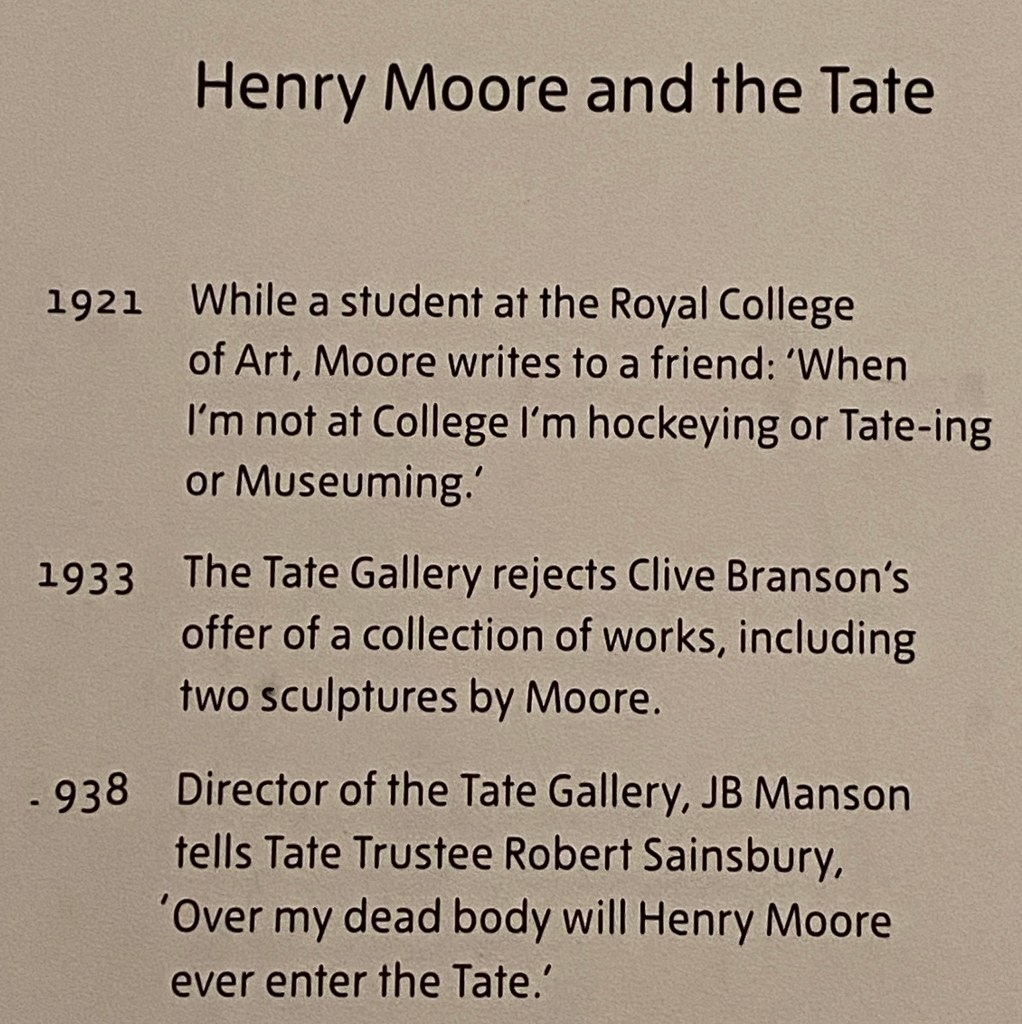
Do you notice anything unfamiliar in this sentence: “When I’m not at College I’m hockeying or Tate-ing or Museuming“?
The words “hockeying“, “Tate-ing” and “museuming” don’t really exist. But they convey an idea, the idea that the author, artist Henry Moore, was busy playing hockey and visiting Tate and other museums.
Did Moore make a mistake? No, he didn’t. He was playing with the language.
The suffix ‘-ing’, when attached to verbs, can indicate an activity, that is, a noun. For example, I love running; Jane has gone swimming; Peter loves fishing. These three words – running, swimming, fishing – describe sports, pastimes. Moore considered visiting museums a pastime, so he used the suffix to convey that.
And how does knowing this help you expand your vocabulary? Simple: word families.
Word families are words that share a base word: happy; happiness; unhappy; happily; happier; happiest. Or thick; thickness; thicker; etc.
Now, as you can see, we can create multiple words from the base word. And each one of them counts as a new word. This means that, for each one word you already know, you can expand your vocabulary by adding suffixes and prefixes or other words to them.
Why don’t you go ahead and try? Let’s start with the verb ‘swim’. Can you think of any words that share ‘swim’ as a base?
The person who swims is a… swimmer.
The sport is… swimming.
You may need to wear a… swimsuit.
Another good way to expand your vocabulary, is to use a same word in different ways.
In English, when we change the position of a word in a sentence, it may change its part of speech, that is, its function in that sentence.
In the sentence: “She goes swimming on Tuesdays”, ‘swimming’ is a noun, it is an activity. But if we place ‘swimming’ before a noun, it becomes a modifier: “She is taking swimming lessons”. ‘Swimming’ is now modifying – or qualifying – the type of lessons she is taking.
Can you identify the different roles the word ‘swimming’ is taking in this sentence?
“Swimming (1) is a great form of exercise. All you need to start your swimming (2) lessons is a swimsuit and a swimming (3) pool.”
(1) noun; (2) adjective; (3) adjective
What about the word ‘pen’?
“I can pen (1) the letter if you lend me a pen (2).”
(1) verb; (2) noun
Now the ball is in your court. Try to notice how words are used in the texts you read from now on. How many word families can you find? What about nouns working as verbs or adjectives?
 vspoke language